
Introduction
For more than a decade, the Foundation has steadily expanded its investment in public-facing anthropology. A central part of our mission is to amplify the impact of anthropology within the wider world.
Yet this moment calls for reflection and reimagining. In 2025, the Foundation made the difficult decision to close SAPIENS amid a rapidly changing political and media landscape. We are witnessing renewed attacks on expertise and universities, efforts to discredit and marginalize anthropology, increasing fragmentation of news ecosystems, and the accelerating influence of Generative AI, social media, and video platforms on how knowledge circulates publicly.
Together, these shifts raise urgent questions: What should public anthropology aim to accomplish now? Who is it for? And what strategies will allow anthropological knowledge to matter in the years ahead?
**
Anthropologists have long sought to engage with audiences outside of the academy, and to have some impact on prevailing notions about humanity in ways that go beyond university classrooms. While the legacy of public-facing anthropological endeavors is undoubtedly complicated, taken as a whole, this history teaches us that the potential for anthropological ideas to shape the world is significant.
This legacy encompasses the deeply devastating effects of racist ideas regarding human origins and scientific racism, especially in the discipline’s early days. But it also includes a robust body of anti-racist scholarship in staunch opposition to that early work, which emerged at the same time, was championed in the U.S. by figures such as W. Montague Cobb, and has continued to flourish since then. The careers of scholars such as Margaret Mead, whose works appeared regularly in mass media outlets of the early twentieth century, and Zora Neale Hurston, whose genre-expansive writings made anthropological work more accessible, are instructive.
At Wenner-Gren, amplifying the impact of the discipline of anthropology remains of central importance to us. Historically and into the present, this aim has been reflected across our programs. SAPIENS was, of course, our most well-known and ambitious public project, but this commitment to public scholarship is present across many programs.
In some cases, such as in our Engaged Research Grants, we support collaborative research projects that bring together anthropologists and community partners to generate shared insights and collectively envisioned outcomes. Our Symposium program, which began in the 1950s, brings together global cohorts of scholars around key areas of research that advance conversations in the field, and has resulted in open access collections of articles that are published in Current Anthropology. Our newer Seminar program, launched in 2019, is conceived of as a space for intergenerational conversations that impact the future of the discipline, and has resulted in a variety of publicly available resources, including traditional journal articles as well as public-facing websites that are intended to serve as learning resources for students, teachers, and members of the general public. We are enthusiastic in our support of scholars whose projects incorporate public facing elements, as well, in our Conference and Workshop program and individual research grants, as well.
Some recent modifications to our existing programs solidify our commitment to supporting public-facing scholarship. For the next four years, our Global Initiatives Grant is focusing funding on public anthropology projects. Our Fejos Fellowship, which previously supported ethnographic film projects, has expanded eligibility to include projects that incorporate all media beyond print. The guidelines for our Hunt Fellowship have been modified to focus on support for book projects intended to reach popular audiences.
All of these changes provide mechanisms to support scholars engaged in meaningful and sustained public facing work—a strategy which speaks to the discipline’s longer history of popular engagement and rises to meet the challenges of a world where anthropology as a whole is facing significant challenges.
**
This Forum brings together a range of voices to reflect on the future directions, possibilities, and responsibilities of public anthropology. We invited a global group of authors so that anthropologists may learn across different social, political, and historical contexts.
We asked the participants to explore these questions:
- What role should public anthropology play in this political and media moment?
- Who are the publics we must prioritize reaching, serving, or collaborating with?
- What forms, platforms, partnerships, or tactics will allow anthropological knowledge to have meaningful public impacts in the years ahead?
The essays that follow offer different answers and chart possible paths forward. Political moments come and go, but the deeper task remains: to understand the foundations we have inherited and to consider what we must build for the generations that follow.
Donna Auston is senior program officer for meetings, outreach, and engagement at the Wenner-Gren Foundation, and Chip Colwell is program director for public anthropology at the Wenner-Gren Foundation.
Anthropology Needs to Be in Better Conversations with the World
These are difficult and polarized times. Public discourse is increasingly shaped by fear, distrust, misinformation, moral certainty, and an inability to live well with difference. Anthropology has long offered a counterpoint to this condition: grounded, evidence-based hopefulness about what humans are, have been, and can become. Anthropological knowledge demonstrates that there are many successful ways to be human, some we are yet to imagine.
Anthropological work unsettles taken-for-granted assumptions about hierarchy, competition, and fixed difference by situating them within broader cross‑cultural, historical, and biocultural contexts. It shows that current configurations of economics, power, race and gender are neither fixed nor inevitable. None of these realities are “natural”; they are one set of possibilities. And there are so many other possibilities!
Making a better world requires developing, exploring and enacting these other possibilities of human experience. By developing and engaging a wider range of modalities, we can bring anthropological evidence of interdependence, care, social learning, and human variability into public circulation. In doing so, we encourage appreciation for human and social diversity, expanding public imaginaries of what is possible. This requires us to move beyond the assumption that academic venues are the only valid or valuable sites of dissemination. Rethinking how anthropologists communicate about how and why things came to be, and actively challenging narratives of inevitability, are necessary if we are to help publics navigate the 21st century.
But understanding and justice cannot be achieved through prescriptive claims. We need to develop engaging visual, narrative, spoken, and digital forms that showcase anthropology as a comparative, reflexive mode of inquiry, rather than as moral instruction. When we turn anthropological frames towards also understanding our audiences, we can foster forms of public engagement grounded in humility and openness to difference. In this way, anthropology can act as a co-constructor of possibilities at a time when such work is deeply needed. The goal must be to inform and collaborate without moralizing or being seen as pushing ideological assertions. Anthropologists can, and must, practice and encourage epistemic humility.
When we attend to how our work is received, we better understand how it becomes meaningful in different contexts. By using platforms and formats that foreground anthropologists thinking aloud, accessible storytelling, and minimal jargon, we can strengthen the public presence of anthropological ways of knowing. Such approaches resist simplification, foreground relational responsibility, and expand the horizons of human possibility in collaboration with broader publics.
Agustín Fuentes is professor of anthropology at Princeton University, Devi Snively is an independent writer/filmmaker, and Laura McLauchlan is research fellow at the University of Technology, Sydney.
Leveraging Media to Advance the Future of Public Anthropology
Much of our understanding of human history, encompassing both similarities and diversity, is derived from anthropology—a discipline dedicated to explaining what makes us human. It elucidates the physical and biological adaptations that lead to variations, such as skin color, height, and hair texture, while also addressing our genetic similarities and differences within and between populations. Additionally, anthropology plays a crucial role in interpreting our cultural similarities and differences globally.
During its early years in the 19th and 20th centuries, anthropology used television, newspapers, radio, and academic journals and books to reach its audience. However, recent political and media changes—especially the rise of social media and AI, which allows rapid content sharing to large audiences—contrast with traditional media that effectively targets experts, policymakers, and practitioners. Anthropologists must consider how to adapt to these changes.
In an era of rapid information spread and minimal anthropological content moderation, misinterpretation is likely. Such situations can exacerbate public misinterpretations of facts, history, and events, including intentional human rights violations, especially against vulnerable and marginalized populations, resulting in confusion and hate advocacy.
For example, in Tanzania—a nation with a rich human history spanning three million years—there exists a persistent misconception among the general public that modern humans descend directly from chimpanzees or gorillas. This error illustrates how anthropological knowledge has largely been directed toward a global community of experts rather than a local audience.
What lies ahead? While the question may appear straightforward, the answer is complex.
A few suggestions emerge.
First, as most anthropologists lack ownership of media outlets, they must advocate persistently for social media platform owners, such as Meta (Facebook, Instagram, WhatsApp), X, Alphabet (YouTube), and ByteDance (TikTok), to implement stringent policies that restrict unverified anthropological content.
Second, there is a need to enhance campaigns that incorporate anthropological knowledge into social media, thereby raising awareness and correcting public misconceptions regarding human history and cultural and biological diversity.
Last, it is essential to adapt to the evolving generational demands and media landscape, requiring innovative strategies to engage early and current generations, including Generation X, Millennials, Gen Z, and Generation Alpha.
Musa Mwitondi is lecturer in archaeology at the University of Dar es Salaam.
Cotton, Ian, and Sarah Darragh. 2023. New horizons in digital anthropology: innovation for understanding humanity. Paris: UNESCO Publishing.
Eriksen, Thomas Hylland, and Finn Sivert Nielsen. 2013. A history of anthropology. London: Pluto Press.
Polishing the Noun: Why Adjectives Are Insufficient
Public anthropology is not just about taking our work public. The more interesting (and more demanding) possibility is letting publics take us seriously enough to change what we do.
In my own language-focused work, I have watched traditional knowledge extraction be reframed as collaboration by harnessing ostensibly inclusive terminology. Referring to research as “community-engaged” or “relational” offers no guarantees that it is. As journalist Gary Younge writes, ‘adding the adjectives does not change the noun.’ Rebranding without real change is sleight of hand, a verbal performance of rehabilitation without substance.
In such semantic laundering, Indigenous scholars and knowledge holders are often recast as “collaborators” (a term with unfortunate association for many older Europeans) or “consultants” (reminiscent of World Bank speak), both notable improvements over the earlier word, “informants” (simply rotten by any estimation). Whatever term we use, people’s songs and stories are still too often folded into a scholar’s singular authorship, leaving a community with little tangible or intellectual benefit and sometimes not even holding copies of the recordings that contain their voices.
As a discipline defined by critical engagement, we need more than an ethical corrective. The transformation must be epistemic, and who is better positioned than anthropologists to lead the way? Only when scholars recognize diverse forms of authority and come to respect different forms of expertise will we stop mining cultures as raw material, and start treating the people who sustain them as true intellectual partners.
In 2015, the Social Sciences and Humanities Research Council, the Canadian federal research council that supports anthropological research, made this realignment explicit. The Council would only support Indigenous research when conducted by and with Indigenous Peoples, rather than on, for or about them. While the shift in prepositions is nuanced, the changes have been profound.
How does this translate into the current political moment, when expertise is under attack, programs are being shuttered, and minoritized scholars are at ever greater risk? For me, the answer is clear: Public anthropology must model forms of knowledge-making that are accountable and useful to the communities with whom we have the privilege of working. The goal should not be to win the attention economy but to build durable infrastructures of trust and relationship.
Which publics should we prioritize? First, for those of us working on unceded territories (i.e., stolen lands) in North America, we must begin by acknowledging the intellectual and strategic goals of the Indigenous nations on whose lands we live and whose futures are inescapably entangled with our institutions. Second, we should connect with educators, journalists, curators, culture workers, and community organizers who translate what we do into policy and practice. Third, we must model to students and early-career scholars research practices that are realistic and that acknowledge error, and not heroic narratives soaked in hubris.
Instead of asking what anthropology is good at, we must ask what anthropology is good for, and then engage with a world whose crises do not pause while we polish our prose.
Mark Turin is associate professor at the University of British Columbia, cross-appointed between the Department of Anthropology and the Institute for Critical Indigenous Studies.
A View from India
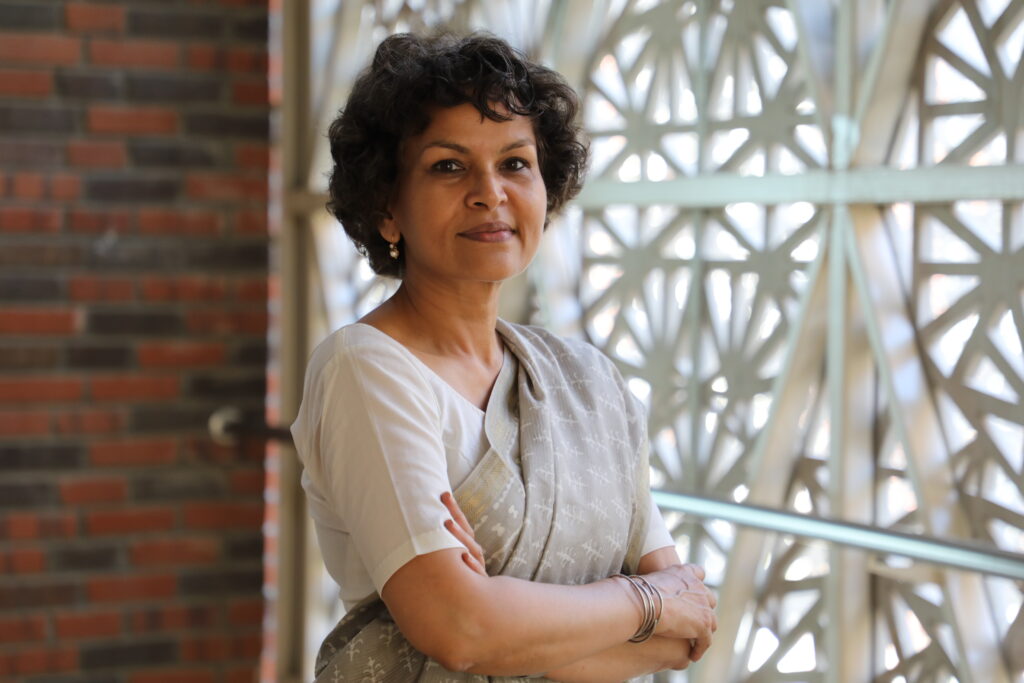
In postcolonial nations like India, public engagement has always been an obligation enjoined on anthropologists. State policies of affirmative action, the place of religion in personal law, the rights of adivasis who oppose dams and mining projects that displace them—these are just some of the arenas of debate in which our ability to deconstruct the common sense of our times has helped to bring other ways of thinking into the conversation.
In these dialogues, the op-ed article and the panel discussion have served as our public arena. While some of our authority here has come from the cultural capital of belonging to the literati, its legitimacy has also been based on how we have produced knowledge, through close, sustained study of beliefs, practices, and relationships.
As I have written elsewhere, an increasingly neoliberal academy and a Hindu-supremacist state have gradually squeezed out our place at the public scholarship table. Inhospitable conditions of work and a climate hostile to critical thinking and speech make it harder to say anything meaningful beyond feeble protest.
Yet, as I realized when an hour-long interview that I recorded with a popular political satirist last year got more than 100,000 views (some other anthropologists got more than 400,000), people are hungry to hear us. This untapped audience is mostly composed of students and young professionals who are shut out of elite universities, who are not proficient in English, but who are striving to acquire the tools to make sense of their world and the troubling questions it raises.
This experience has reaffirmed my belief that being bilingual is vital for anthropology, or for that matter, any public scholarship. This is not simply about writing and speaking in English and other Indian languages, but also of employing different vocabularies and registers of voice, using words and images. Doing this isn’t a one-way street. Learning to speak more crisply and colloquially, with humour and arresting analogies, has clarified my academic prose and made it less ponderous. But, as in this essay, I struggle to combine brevity with nuance.
Beyond translation, there is much to be gained by doing anthropology with people, rather than simply about them. I currently work with a youth collective that writes about life in Delhi’s squatter settlements, all of us pushing each other to observe, reflect, and act more effectively. Together, we connect to independent media and other organizations, combining ethnographic intimacy with political solidarity.
It may not be enough to secure the future, but moving anthropology from the halls of power to modest neighbourhood courtyards may keep hope alive.
Amita Baviskar is professor of sociology-anthropology and environmental studies at Ashoka University, India.
Small Forms of Publicness
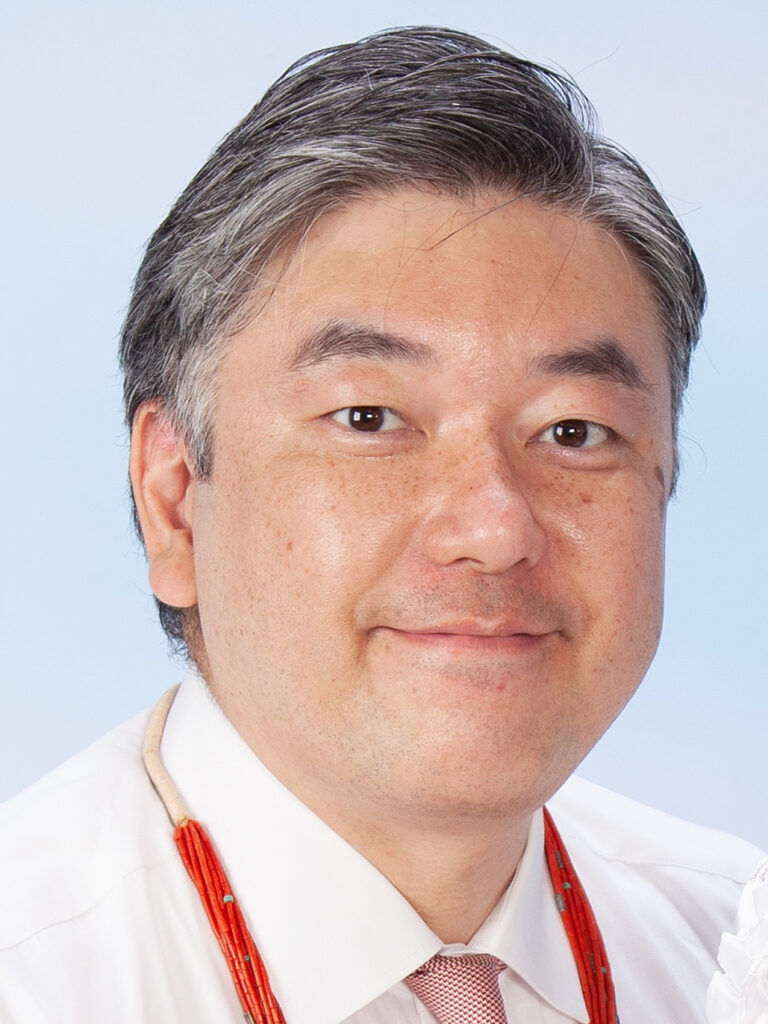
For anthropological knowledge to maintain meaningful public influence in the future, I believe it must move beyond academic publications and engage society through diverse forms and collaborative practices. Exhibitions, films, community archives, and educational activities are important ways of bringing anthropological perspectives to broader publics.
As a museum anthropologist, I have come to see there are additional obligations. For those scholars working with materials held in museums, it is also important to make visible not only finalized results, but also the processes of collections review with source communities, collaborative interpretation, and ethical dialogue surrounding the handling of culturally sensitive objects.
Museums will continue to be important spaces in the future. However, they can no longer function simply as places for displaying research outcomes. They must increasingly become sites of collaboration, historical dialogue, and negotiation over reinterpretation and repatriation.
Through my involvement in Indigenous collaboration and community-based museum practice, I have come to feel that anthropologists should function not merely as interpreters of other cultures, but as mediators who help create dialogue and shared knowledge. At the same time, I have found that there are two groups requiring especially careful attention. One is the communities that have long been affected by colonial histories of collecting and representation. The other is museums and academic institutions that already understand themselves as inherently “public,” but often in ways shaped by one-directional authority. For those working in national museums, collaborative practice with source communities can also bring significant changes to established ideas of authority, expertise, and collection management. As a result, some of the most delicate negotiations may take place within the institution itself.
Looking back over my nearly twenty years in the field, I sometimes feel that opportunities for anthropologists to engage seriously in this kind of institutional and collaborative transformation may come only once, if at all, during a career. Increasingly, I feel that public anthropology will never emerge all at once at the largest scale, suddenly impacting all of society. Rather, it may gradually take shape through the accumulation of “small forms of publicness” and relationships of trust built among colleagues, communities, museums, and research institutions. Continuing to build such modest but vital relationships patiently may become increasingly important in the years ahead.
Atsunori Ito is associate professor at the National Museum of Ethnology, Japan.
Anthropology at the Sharp Edges
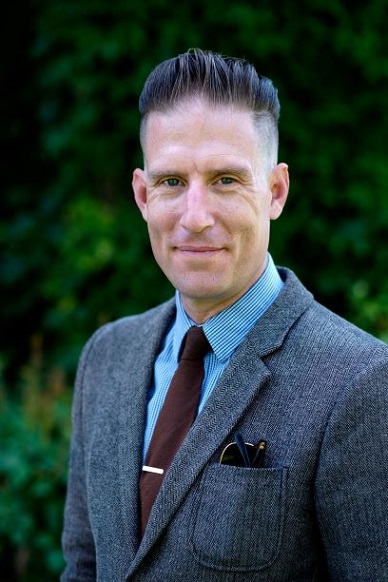
Anthropology has an obligation to speak to contemporary political and media moments, to reach the public and make sense of crises and current affairs by connecting lived experiences to the histories, institutions, and relations that shape them. In a public square flooded with noise and spectacle, anthropology can contribute depth, context, and stories that move people to think and act with purpose. Anthropology is strongest when it demonstrates that vulnerability and prosperity are historically produced, not randomly distributed. Anthropology is most powerful when it surfaces the multiple ways that diverse communities see and experience the world—how they endure, adapt, and build otherwise.
Should anthropologists prioritize reaching the general public? I consider this an elusive target at best, perhaps even imaginary.
Instead, I think of those living closest to the sharp edges of climate change, late capitalism, colonialism, racism, and displacement. I think of teachers and students, practitioners and public servants, journalists and organizers, and those who can draw on anthropological insight to make transformative interventions in schools, neighborhoods, organizational practice, and policy debates.
That is, my sense is that anthropology matters most when it is accountable to those who experience the greatest vulnerability, who have the most at stake.
I am drawn to an idea, perhaps no less fugitive than the “general public,” of genres and platforms of writing that are multiple, accessible, and reciprocal. Sure, we need op-eds and essays, but also visual stories, podcasts, public talks, multilingual resources, museum and community exhibits, and publicly accessible materials people can actually use. My preference is to work with community-based organizations, community leaders, mutual aid networks, local media (not always easy), and public agencies, not merely as audiences for disciplinary knowledge, but as collaborators in its production.
At the Society for Applied Anthropology, we recently created Dispatches from Applied Anthropology, a new digital magazine for short-form, plain-language and multimedia pieces designed to bring applied anthropology to broad public audiences. Dispatches highlights how applied and practicing anthropology improves real lives via explainers, mini-features, Q&As, op-eds, profiles, visual essays, and SfAA News. It connects anthropological insight to current events, while integrating diverse media in mobile-friendly, web-ready formats that are accessible, shareable, and built to travel beyond our usual circles.
The challenge that a more public anthropology poses is translation without flattening, collaboration without extraction, and public engagement without surrendering critique. Anthropology’s public value lies in helping people see root causes, imagine alternatives, and act together toward more livable futures.
A. J. Faas is professor and graduate coordinator in the Department of Anthropology at San José State University, and president of the Society for Applied Anthropology.
Discussing public anthropology and archaeology requires situating our work within the Latin American context, and more specifically within Argentina, where we conduct our research. Here, Indigenous peoples continue to experience longstanding forms of marginalization and silencing rooted in broader historical relationships among modernity, nation-building projects, and indigenism. These dynamics persist socially through prejudice, politically through policies that weaken Indigenous rights and institutions, and academically through the exclusion of Indigenous voices from many processes of knowledge production.
For us, this work involves three interconnected forms of collaboration: sharing knowledge and experiences, co-producing research, and helping create broader visibility for Indigenous perspectives and histories.
Sharing begins with a simple idea: people are unlikely to protect what they do not know or value. This entails moving beyond academic spaces and engaging with contemporary forms of communication, especially digital media and globally connected platforms. Such tools can help sustain the visibility of Indigenous histories, memories, traditions, and contemporary lifeways.
Co-producing knowledge also requires moving away from extractive or top-down research models. Instead, it involves creating collaborative spaces where research questions, methods, and interpretations are shaped through dialogue with Indigenous communities and grounded in their priorities and everyday realities.
In recent years, we have developed virtual reality projects for diverse audiences. These initiatives reconstruct not only archaeological sites and material culture, but also Indigenous knowledge and practices. More importantly, they seek to place emerging technologies at the service of communities themselves: as tools for communication, education, visibility, and the sharing of perspectives often absent from dominant historical narratives.
In contexts marked by inequality and historical silencing, the future of public anthropology may depend less on simply making research public and more on making knowledge, technologies, and storytelling practices more collectively shared and shaped.
Joaquín I. Izaguirre and Alejandro A. Ferrari are researchers at the Instituto Multidisciplinario de Historia y Ciencias Humanas (IMHICIHU), National Scientific and Technical Research Council (CONICET), Buenos Aires, Argentina.
Demystifying Language Project: Public Anthropology as Mutual Aid
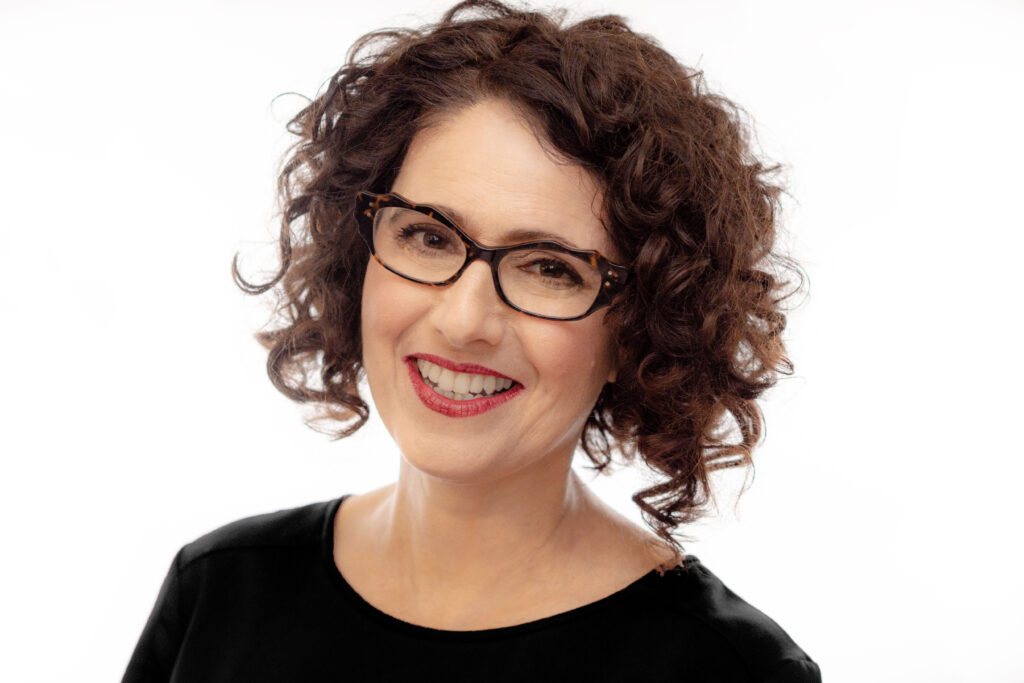
Public anthropology that builds localized, long-term relationships in shared neighborhood spaces can sustain our discipline and our world. Given ongoing attacks on the academy and public education, localized partnerships that bridge educational institutions are a way to reimagine anthropological research as a practice of solidarity.
As David Graeber and Andrej Grubačić (2021:10) put it, “To make a new world, we can only start by rediscovering what is and has always been right before our eyes.”
The Demystifying Language Project (DLP), composed of an interdisciplinary team of seven academics, is one such localized public anthropology project: a research and social justice collaboration between two NYC public high schools and Fordham University. The impetus was our frustration with how often linguistic anthropology scholarship on language, power, and inequality is written and published in ways that make it inaccessible to those most affected: young people and their teachers.
Our innovation has been to partner with teachers, high schoolers, and undergraduates to create resources and opportunities for making linguistic anthropology scholarship relevant and accessible in resource-poor public high schools. The DLP is informed by the Central American social justice concept of accompaniment, where all participants bring their diverse lived expertise to work toward justice together (Arnold 2019).
We first designed a writing workshop where teams of undergraduates, high schoolers, and scholars “transposed”—that is, rewrote in a different key—a previously published article for teen readers. Throughout, students and scholars were co-authors of new knowledge, effectively bringing theory and practice together.
Based on the workshop, we designed and created the DLP Open Educational Resource, featuring twelve articles, a linguistic toolkit, and research publications (Mena and Ingebretson In Press). This is just the beginning. Another writing workshop is slated to expand our site, and we’re collaborating with two high school teachers to create a Critical Language Course for NYC teachers to innovate existing curricula.
This type of public anthropology can change our discipline, not only how we write about our research, but who our interlocutors are. During the DLP writing workshop, teens reported how impactful it was to have a “big professor” take their ideas seriously. The DLP asks how high schoolers and their teachers engaging with accessible research on language and power might come to understand their lives and their futures in new ways.
There are, of course, challenges to this kind of sustained, localized public anthropology that aims to dismantle educational hierarchies. For example, the DLP struggles with a bleak funding landscape and overextended stakeholders. And yet, when leadership of many sorts is failing us, public anthropology—like the DLP, which “rediscovers what has always been right before our eyes”—offers hope.
As mutual aid movements across history and communities remind us, we can cultivate solidarity through responsibility and care for the next generation.
Ayala Fader is professor of anthropology at Fordham University.
Ayala Fader is founding director of the Demystifying Language Project, and the co-directors (in alphabetical order) include Lynnette Arnold, Justin A. Coles, Britta Ingebretson, Mike Mena, Johanna S. Quinn, and Bambi B. Schieffelin. We are grateful to the Spencer Foundation for Educational Research, Wenner-Gren Foundation for Anthropological Research, and Fordham University for generously funding the June 2023 DLP Writing Workshop.
Arnold, Lynnette. 2019. Accompanying as accomplices: Pedagogies for engaged learning in socio-cultural linguistics. Language and Linguistics Compass 13:e12329.
Graeber, David, and Andrej Grubačić. 2021. Introduction. In Mutual aid: An illuminated factor of evolution. P. Kropotkin. Pp. 2-10. Oakland, CA: PM Press.
Mena, Michael, and Britta Ingebretson. In press. Transposition as activism: Toward a public-facing linguistic anthropology. Journal of Linguistic Anthropology.
Unearthing Reality: How Fun Archaeology Beats Misinformation
Archaeology plays a key role in public understanding of what it means to be human: who we are, where we’ve come from, and how we can better relate to one another.
Australia has a deep and evolving history spanning at least 65,000 years. However, a gap remains in public understanding of this rich archaeological record—a problem further exacerbated by the lack of engaging and accessible information relative to misinformation. Addressing this gap requires fundamentally rethinking how archaeology communicates with the world, treating public archaeology not as an optional component to disciplinary practice, but as a core professional responsibility.
Australian archaeology has historically prioritised a publishing model that just doesn’t reach everyday Australians. Archaeological evidence refuting misinformation exists largely within academic literature, remaining inaccessible to general audiences behind paywalls or through the technical language in which it is written.
Public archaeology must prioritise translating this evidence into compelling, accurate, and widely distributed narratives for non-archaeologists. Public events, school curricula, podcasts, social media, exhibitions, documentaries, and site interpretation can be designed as effective public information interventions. The goal here isn’t simplification, but accessibility through deliberate storytelling, narrative structure, and the ability to make evidence not just accurate but compelling.
Another priority is addressing the intergenerational impact of excluding precolonial histories from formal education. Children who learn minimized or continuity-denying accounts of Australia’s deep time Aboriginal and Torres Strait Islander histories carry those frameworks into adulthood. Meaningful change can occur when archaeologists engage directly with schools and teachers, ensuring deep time histories both enter curricula and that teachers have access to evidence-rich, accessible resources.
We already have some great examples of how these principles have been put into practice. National Archaeology Week is an annual national celebration of Australian archaeology and the work of Australian archaeologists and demonstrates what disciplinary-wide engagement can achieve when grounded in public archaeology and science communication principles: diversifying formats, lowering access barriers, and prioritising fun alongside education.
The education outreach work of the Australian National Committee for Archaeology Teaching and Learning (ANCATL) is another good example, developing curriculum-aligned resources themed on Australia’s long and diverse archaeological record and building direct partnerships with teachers and professional teaching associations around the country.
We feel strongly that Australian—and indeed global—archaeology can no longer treat public engagement as peripheral to its purpose. Effective communication must be centred as a core responsibility of the discipline to engage current, and future, generations.
Georgia Stannard is lecturer in the Department of Archaeology and History at La Trobe University, Australia, and Co-Chair of the Australian National Committee for Archaeology Teaching and Learning, and Caroline Spry is adjunct senior research fellow in the Department of Archaeology and History at La Trobe University, Australia, and Co-Chair of National Archaeology Week in Australia.
Connecting Anthropology to What Matters
Public anthropology must start by showing people what is truly special about our discipline. Anthropology’s uniquely holistic lens connects biology, culture, deep history, and lived experience in ways no other field can. This unique lens is not self-evident, and navigation of information is increasingly shaped by algorithmic platforms that reward provocation over depth.
As anthropology communicators and educators, we cannot simply produce programs grounded in sound science and expect engagement. We must actively show why understanding our origins and behavior matters by meeting people where they are currently learning and connecting with the questions that matter to them about identity, belonging, and what it means to be human.
Anthropology’s most powerful draw is simple: People are endlessly curious about themselves. Anthropology offers one of the richest frameworks for exploring that curiosity. Learning has increasingly become a lifelong, self-directed process, dominated by learning options outside academia. Podcasts, video platforms, and social media offer access to a wealth of knowledge, but credibility can be difficult to navigate.
In crafting our programs, The Leakey Foundation places scientific experts at the center of sharing the science and prioritizes researchers from the communities where the work is being done. Representation is not incidental. When the public sees themselves reflected in the person given the platform to speak, engagement and trust deepens. We must also offer our audiences opportunities to shape what we create, not just to consume it. Once we understand our audiences, we can collaborate with scientists to help them share their work in ways that are compelling, accessible, and genuinely meaningful to the public. Growth through iteration is also essential. When we embrace experimentation, adaptation, and the lessons of imperfection, we reflect the very humanity that anthropology seeks to understand.
Two audiences are central to the future of public anthropology: deeply curious thinkers and the next generation of scientists. Holistic thinkers are already asking big questions about the world and searching for frameworks that match the depth of their curiosity. Anthropology offers exactly that. The second, especially those not historically represented in the field, ensures the discipline grows richer, more diverse, and more relevant.
Louis Leakey believed that understanding our origins could change how people see themselves and each other, and also guide the planning of humanity’s future. This conviction has not aged. In a time when our shared humanity is so easily dismissed, helping people discover how much they have in common, written into their biology and behavior over millions of years, is not merely academic. It is urgent.
Arielle Johnson is education director at The Leakey Foundation.
SPARK: An Integrated Approach to Public Anthropology
Anthropology offers a distinct perspective urgently needed in today’s social, political and environmental climate: deep contextual understanding of how people interpret and live through social change on their own terms. In an increasingly polarised world, it asks us to understand and recognise each other, consider “what makes us human,” think in radically new ways, and question structures of power.
However, in the United Kingdom, anthropology faces serious challenges.
Departments are closing and student numbers are falling, driven by low visibility and a perceived lack of value. Anthropology is only taught in a small minority of secondary schools. Its expertise is rarely engaged by media, despite a thriving appetite for academic commentary. Isolated activities, however successful locally, are not enough to address these challenges. School visits, podcasts or public lectures rarely produce lasting change. What has been missing is continuity, coordination, and communications capacity.
In response to these challenges, we are bringing together academics, teachers, organizations, and professionals as the Supporting Public Anthropology, Research and Knowledge (SPARK) collective, which aims to combine efforts and build platforms through which audiences outside the academy can engage with the discipline directly.
In the media, anthropology lacks a centralised “story pipeline.” Journalists rarely know where to find anthropological expertise quickly, and public debate is dominated by frameworks that obscure cultural complexity. We need a visible network available for commentary, and media training to help scholars translate insight into accessible narratives. On social media especially, we must amplify the perspectives of students and early-career anthropologists best placed to reach young audiences.
In education, we must provide resources for teachers and support initiatives that bring anthropology into classrooms, particularly in state schools and among students from underrepresented backgrounds, introducing the next generation to the unique perspective it brings.
In policy, we must demonstrate the relevance of anthropological insight to political debate and decision-making and strengthen direct engagement with policymakers and public institutions.
In business, we must expand pathways beyond academia: internships, placements, and residencies that build links with the private sector and embed anthropological expertise in organisational practice.
The digital magazine SAPIENS demonstrated real public appetite for anthropological storytelling when presented accessibly; its loss has left a significant gap. Filling it requires a networked, infrastructure-oriented approach: a durable system of shared resources, communications, training, and partnerships that outlast individual funding cycles. By connecting anthropologists with schools, media, policymakers, and the public, we can reposition anthropology not as a marginal academic specialization, but as an essential public resource for understanding contemporary society.
Andrew Sanchez is associate professor in social anthropology at the University of Cambridge, Peggy Froerer is professor in social anthropology at Brunel University, Orlando Swan is memberships and outreach officer at the Royal Anthropological Institute, and Sophie Cowling is education and communications officer at the Royal Anthropological Institute.
Engaged Research to Strengthen Public Anthropology
To have a public impact, anthropological knowledge must be collective and engaged.
This might seem to be a simple answer to the questions posed by this forum to explore the future of public anthropology. But the argument here is that to remain alive, anthropology must radicalize its ethnographic method and deepen its reflections by engaging with people rather than writing about a colonial difference. For that to happen, research projects—from their design to their budgets—must be conceived collectively with those with whom knowledge is produced (social movements, community associations, Indigenous communities, Quilombolas, traditional communities, etc.), and the product of knowledge must be accessible.
Because ethnography allows us to learn with and across different worlds, the knowledge it produces should not be confined to conventional academic texts or familiar debates in anthropological theory. Engaged research opens the possibility for multiple forms of knowledge production, including poetry, film, photography, performance, and other collaborative modes of expression. Anthropologists should therefore attend not only to what knowledge is produced, but also to how it is produced, for these forms emerge most fully when research is constructed with the people whose lives, histories, and worlds are at its center.
Ethnography appears here as a way of reflecting collectively with the world and as a tool for the struggle for territories, rights, and social justice. In this sense, resources must also circulate not only within academic circles—allocated to individuals with university degrees—but also to community researchers with whom we build knowledge.
Moving away from the role of the intellectual who alone conceives of research and receives funding to carry it out implies, therefore, an epistemological shift by challenging the notion of the subject of knowledge in ethnographic practice. We must move away from an academic perspective that starts with a specific author or model to theorize. Instead, we must reflect on the procedures through which research is conducted. A collective production of knowledge allows us to challenge the way ethnography is practiced, both as a method and as a form of writing.
Ethnography grounded in engaged research leads us to a knowledge that does not seek to classify different ways of life or peoples, but rather to narrate with them diverse ways of living and inhabiting the world. In addition to rethinking research projects and budgets, we must rethink the very way we write and make academic texts.
The movement proposed here is to make anthropological knowledge not a place for mobilizing concepts that are just good for thinking. Anthropological knowledge should be developing methodologies for engaged research. It should produce collective texts that affect people through a writing of life that makes explicit embodied social and racial locations—destabilizing people’s assumptions, breaking comfortable ideas, and keeping the spirit of revolt alive.
Maíra Vale is collaborative professor of social anthropology at Federal University of São Carlos and institutional coordinator at imuê – Women and Economy Institute.