Towards a New Common Sense? Narratives of Inequality in Colombian Insurgent Geographies
Engaged Research Grants support research partnerships that forge ethical relationships and empower those who have historically been among those researched in anthropology. Designed in alliance with individuals who have born the impact of various kinds of marginalization, these partnerships bring together scholars and their interlocutors in the mutual production of anthropological knowledge aimed at combatting inequality and promoting the flourishing of human and more than human worlds. The program supports research that promises to make a significant contribution to anthropological conversations through collaborations in which engagement is a central feature of a project from the very start.
The Foundation is proud to share the final report of an Engaged Research Grant awarded in 2024 to Tathagatan Ravindran entitled “Towards a New Common Sense? Narratives of Inequality in Colombian Insurgent Geographies.”
This project examines the extent to which anti-neoliberal mobilizations in Colombia, especially the social uprising of 2021 and the electoral victory of the left reflected deeper transformations in political subjectivities and common sense. It explores whether the uprising contributed to the consolidation of counter-narratives that challenge the naturalization and justification of socioeconomic inequalities. The project was carried out in collaboration with community organizations that had played a significant role in the popular uprising and were committed to sustaining and extending the oppositional consciousness that emerged during this period. In line with the principles of politically engaged research, the project sought to develop a repository of memories of struggle and to organize workshops in which collected narratives were collectively analyzed, fostering a dialogue between academic knowledge and the forms of knowledge generated through lived experiences of struggle.
The Research Process
The methodological design of this project draws on activist anthropology (Hale, 2008), participatory action research (Fals Borda, 2001; Rappaport, 2020), and the pedagogy of problematization (Freire, 1970). One of the objectives of the project is to create a popular repository of oral narratives and audiovisual materials of the participants in the social uprising in Cali. I conducted in-depth, semi-structured interviews with seventy residents of the city of Cali, most of whom were active participants in the social uprising, producing a corpus of oral testimonies. I also collected audiovisual material on the uprising to be incorporated into the repository.
The materials collected were analyzed through a series of participatory workshops. In collaboration with the participating organizations, we conducted the following workshops:
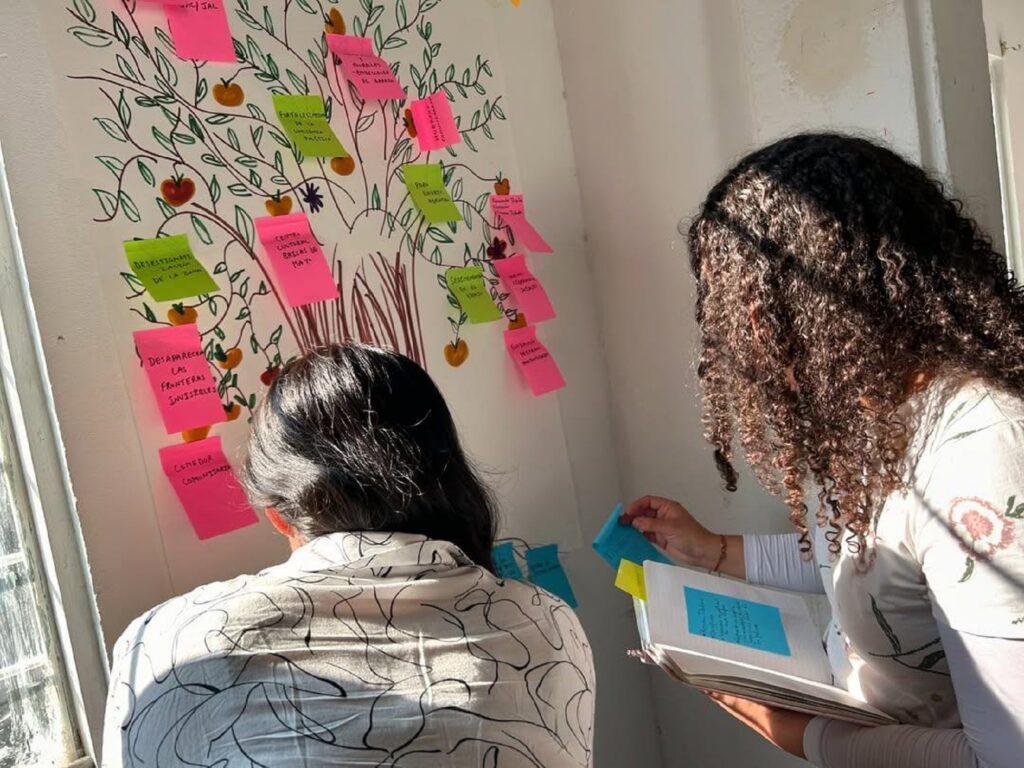
1. Systematization of the narratives (two sessions): Following a preliminary analysis of the collected material, I presented the findings through a tree diagram, where the roots represented the causes, the trunk the processes during the uprising, and the branches its longer-term impacts, and worked with the same interlocutors who shared their narratives to identify gaps and add categories, resulting in a collaborative and participatory systematization of the narratives.
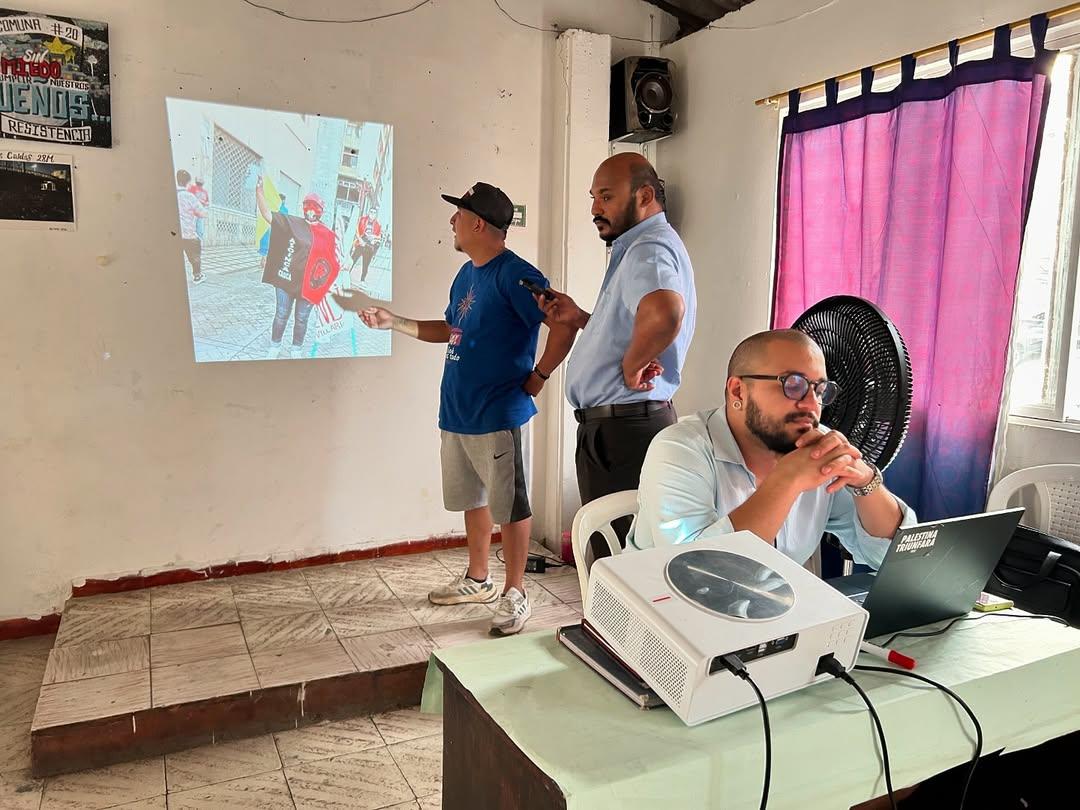
2. Photovoice (two sessions): The participants brought photos and videos they took during the uprising and shared it with the group to evoke collective memories and generate new discussions.
3. Structures of power: The participants formed groups to make graphic representations of the structures of power in the country. Fragments of their oral narratives where they dealt with issues related to the structures of power were chosen as generative themes to initiate discussions on mapping out the structures of power in the country, putting academic knowledge in dialogue with knowledge generated in the trenches of struggle.
4. Intersectionality: This workshop examined the intersectional dynamics of power and resistance. Drawing on selected fragments of oral narratives of the participants, we analyzed how racial, patriarchal, and heteronormative hegemony was reproduced within the mobilization process. These discussions generated critical reflection and debate on the persistence of such forms of hegemony within popular movements, as well as on the intersections of multiple forms of oppression and resistance.
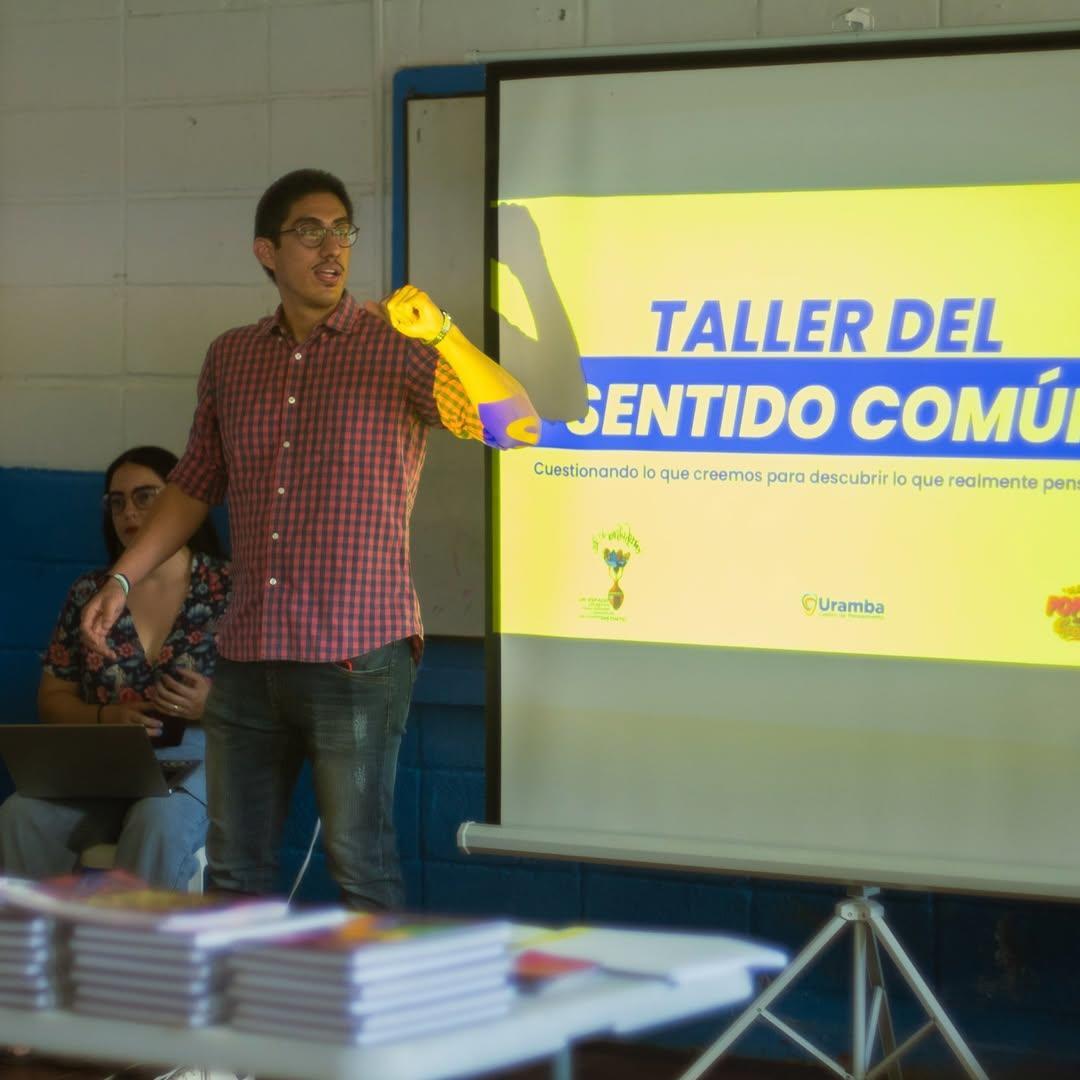
5. Common sense: This workshop aimed to promote collective critical reflection on hegemonic forms of common sense, recognizing their contradictions and structural underpinnings through shared experiences and collaborative creative practices such as sociodrama.
6. Resolution of conflicts: This workshop discussed the different manifestations of conflict in the city and the country, the reconfiguration of conflicts in the city after the uprising, and the concepts of direct, structural, and cultural violence. It put the principal debates in peace studies in dialogue with the lived experiences of the residents of the violence prone neighborhoods of the city.
7. Gender in the mobilizations: Divided into groups based on gender identity, participants discussed the gender dimensions of the roles played by different actors during the uprising and their implications.
8. Leadership: This workshop discussed the qualities of a good leader, with a special emphasis on the process of the emergence of new community leaders during the uprising. It discussed the experiences of leaders who continued their activist work after the uprising and went on to play significant roles in organizing the residents of popular neighborhoods of the city over questions of urban citizenship and local community development. These workshops functioned as sites of collaborative knowledge production and as pedagogical settings that enabled activists to sharpen their analytical tools in the counterhegemonic struggle. They were also reciprocal processes in which academic knowledge was shared with participants in the mobilizations, many of whom do not have a university education, while insights generated through lived experiences of struggle informed and enriched debates in political anthropology.
To ethnographically document the enduring impact of the uprising on everyday political praxis, I conducted participant observation of the activities of organizations that emerged from it. These included political campaigns and demonstrations supporting the new Left government’s efforts to reverse neoliberal policies in education, health, labor, and pensions; commemorative events marking the uprising; and ongoing mobilizations demanding public works in popular neighborhoods. In addition, some former points of blockade have been transformed into spaces for the preservation of social memory and the formation of counterpublics, where commemorations of the martyrs, political assemblies, and performances such as theater and hiphop centered on resistance are regularly organized. I engaged in participant observation of the activities organized at these sites.
Findings of the Research
Existing research on the The 2021 uprising in Colombia is an example of a critical event that results in the emergence of new modes of action that redefine traditional categories and engender transitions (Das, 1995). However, ethnographic research on transitions in different parts of the world reveals that they are marked by an accumulation of hybrid practices rather than radical historical breaks (Shakow, 2011; Buyandelgeriyn, 2008). In this context, this project examined how and to what extent the antineoliberal mobilizations in Colombia and the subsequent electoral victory of the left are symptomatic of deeper transformations in political subjectivities and everyday political praxis.
Existing research on the uprising has examined repertoires of contention, cultural forms of resistance, organizational dynamics, strategic dilemmas, and visible shifts in political culture (Velasquez, 2024; Mendoza and Jaramillo, 2021; Becerra, 2024; Velasco, 2022; Moreno, 2024; Azuero, 2023; Velasquez, 2024). This project examines the long-term impact of the uprising on subjectivities, common sense, and grassroots political praxis. Based on ethnographic research in Cali, the epicenter of the uprising, it addresses two central research questions: (1) How were political subjectivities, practices, and relationships formed during the uprising sedimented in space and reworked in its aftermath? and (2) To what extent did the uprising mark a destabilization of established hegemonic common sense?
The Sedimentation and Reworking of Identities, Practices, and Relationships: Building on and extending discussions on the “sedimentation in space” of identities, vocabularies, and practices deployed in moments of mobilization (Nelson, 2003; Asara, 2020; Gambetti, 2009) and the afterlives of revolutions (Wilson, 2023), this project ethnographically documents the long-term ripple effects of the uprising on local political praxis. Some spaces that were points of blockade during the uprising became spaces for the preservation of the social memory of struggle and the creation of counterpublics. Activities such as the commemoration of the martyrs, political assemblies, and performances of plays and hip-hop music on resistance are regularly organized there.
Another durable impact of the uprising was the emergence of new leaders who came of age politically during the mobilizations. Some of them went on to form new activist groups. They began to regularly organize the residents of their neighborhoods on issues such as demanding public works and defending the informal sector vendors. These new leaders also started occupying positions in elected community-based governance bodies that mediate, represent, and negotiate between residents and local state institutions. These processes significantly transformed local political culture and everyday enactments of citizenship.
The uprising also contributed to a reduction in gang violence in some impoverished areas of Cali. In certain neighborhoods, members of rival gangs came together during the uprising to resist police repression. In its aftermath, some distanced themselves from gang affiliations and became involved in social activism. This shift was fostered by popular education initiatives at the points of blockade, which politicized unemployed youth, including some previously involved in gangs and criminal networks. Some of them affirmed that the uprising led them to rethink their antagonisms, recognizing the state and its repressive apparatus, rather than rival gangs, as the primary adversary.
Transformations in political subjectivities and common sense: The study examines how the uprising destabilized the hegemonic formation associated with the neoliberal ideology of Uribismo, which constructed a political common sense centered on security, public order, meritocracy, and the defence of private property, while framing guerrilla activity as the root cause of national problems. It also discursively linked all forms of protest to guerrilla infiltration, thereby delegitimizing collective resistance and obscuring structural inequalities.
My research reveals that this hegemonic common sense was significantly weakened in the lead-up to and during the uprising. Economic precarity, exacerbated by the neoliberal management of the COVID-19 pandemic and currency devaluation, exposed the limits of meritocratic narratives. At the same time, the 2016 peace agreement, which led to the demobilization of the biggest guerrilla group FARC undermined the credibility of discourses that equated protest with guerrilla violence. These processes unsettled dominant understandings of inequality, meritocracy, and resistance, creating the conditions for mass mobilization.
However, the study demonstrates that this destabilization did not produce a coherent counter-hegemonic ideology. Instead, it generated configurations characterized by ideological hybridity. As Gramsci points out, subaltern ways of thinking are constrained by conceptual structures that are inextricably linked to dominant hegemonic discourses, even during moments of rebellion (Crehan, 2016).
Ethnographic evidence from this study shows that elements of established hegemonic and counter-hegemonic ideologies coexist within participants’ narratives. For example, while many interlocutors criticized neoliberal policies for producing inequality, they simultaneously attributed poverty to a lack of entrepreneurial initiative among the unemployed and the impoverished social sectors, framing it as “mental poverty.” Similarly, critiques of oligarchic power coexisted with continued adherence to the idea of the sanctity of private property.
To trace patterns of ideological hybridity, I develop a framework that analyzes the dynamic configuration of discursive elements and affective forces in the formation of political subjectivities. I draw on the concept of the ideologeme, developed in the Bakhtin Circle and later elaborated by Jameson (1981). They conceptualize ideologemes as condensed discursive units, such as words, phrases, or narrative fragments, through which ideological positions are expressed and contested in social interaction. I extend this concept by incorporating an affective dimension, reconceptualizing ideologemes as affective-discursive condensations that both encapsulate a worldview and mobilize affective intensity and force. My research reveals how diverse ideological formations and historical processes leave behind sedimented layers of ideologemes that coexist within common sense. The fluidity of the ideological landscape arises from the incoherent co-existence of ideologemes drawn from different ideological traditions.
Gramsci observes that the way ordinary people think, is a form of popular philosophy that is fragmentary, disjointed and episodic. The concept of the ideologeme, as the minimal unit of ideology in discourse, enables the identification of these fragments and their relatively incoherent and dynamic configurations, making it possible to trace the specific patterns that characterize each fluid ideological landscape.
These configurations have direct implications for political transformation. The persistence of hegemonic ideologemes within popular subjectivities constrains the scope of structural change and circumscribes the new Left government’s possibilities for implementing policies like radical land reform. For instance, due to the persisting hegemonic influence of the ideologeme of the sanctity of private property, the government had to restrict its land reform agenda to the redistribution of mafia land seized by the state and the model of market-mediated land reform, which relies on state purchase of land from large landowners for redistribution to smallholders. Though the government succeeded in significantly increasing land transfers to peasant, Indigenous, and Black communities, it was far from sufficient to address the extreme inequalities in land ownership in the country.
This project also analyzes another manifestation of ideological hybridity during the uprising and its afterlives: the emergence of intersectional frictions in the process of struggle and its symbolic representations. Afro-descendant activists highlighted the invisibilization of their identities and demands, particularly in symbolic representations, such as the Monument of Resistance, which depicted a light-skinned fist sculpture in a predominantly Black neighborhood. They also pointed to their marginalization in leadership structures and negotiations with authorities. Similarly, feminist and LGBTQ activists denounced patriarchal and homophobic practices within protest spaces and actively intervened to challenge them. These dynamics reflect the persistence of racial, patriarchal, and heteronormative hegemony in highly contentious political uprisings marked by the participation of heterogenous social sectors. To theorize this manifestation of ideological hybridity, I examine the intersectional dimensions of the dynamic configuration of sedimented ideologemes.
These tensions were further explored in the popular education workshops we organized with the participants in the insurrection. This process fostered dialogues, debates, and critical self-reflection on the lingering elements of neoliberal common sense within popular subjectivities and the question of intersectional justice.
Products
One of the most important products of this project is the digital repository, which will contain transcripts of oral narratives and audiovisual materials related to the uprising, such as photos and videos. During the uprising, participants in the mobilizations took photos and recorded videos on their cell phones. Many of the videos are lost when participants change their phones. The materials for the repository are already prepared and classified, and a collaboration has been established with the Robinson Archive at the University of California, Santa Barbara to organize them into a digital repository. In the repository, the oral narratives will be classified into categories and sub-categories, such as the organization of the struggle, experiences of state repression, community pots, medical brigades, artistic, performative, and pedagogic activities in spaces of resistance, and motivations for participation in the struggle. It will be a repository created by the communities and used mainly by them.
Once the repository is created, we will continue to use it as a tool for popular education. Both collaborating organizations will use the repository in their political education activities. For example, Casa Cultural Chontaduro has political education schools for youth and women. We plan to create pedagogical modules for political education schools, using material from the repository, to address topics such as resistance, racial hegemony, and intersectionality. The Union de Resistencias de Cali (URC), a network born out of the uprising and led by the leaders in the different points of blockade, has also expressed interest in using the archive in their political work of fostering the collective memory of resistance. Our participatory methodology that engages protagonists of the social uprising in every stage of the archive’s creation, and our plan to use the repository for political education and public debate, align with vision of a live archive. The repository will help foment the social memory of struggle, pass it on to younger generations, and foster critical dialogue to challenge persistent hegemonies through an intersectional justice lens.
I also plan to work on a book manuscript based on this project. The book will make important contributions to scholarship on social uprisings, political ideologies and subjectivities, collective identities, and intersectionality. As it integrates research on political subjectivities with popular education initiatives, it also advances debates on popular education in the Freirean tradition and participatory action research by considering grassroots pedagogical initiatives as sites where political subjectivities and forms of common sense can be collectively reworked. It also shows how critical pedagogy can draw on sustained ethnographic research on collective political subjectivities. The experience of engaged research in this project also yields insights into methodological tools that can be applied in other contexts to build similar collaborations between academics and organized groups engaged in struggles for social justice. I am already in dialogue with a major university press regarding the publication of this book.
Beyond its contributions to scholarly debates, the findings of the project offer important insights for popular educators, organic intellectuals, and activists engaged in struggles for social justice. Besides fomenting the social memory of struggle, it examines the obstacles to constructing a durable counterhegemonic common sense, showing how the incoherent coexistence of elements of established hegemonic and emerging counterhegemonic elements can hinder radical political transformation. These findings are particularly relevant for social movement organizations seeking to build on the oppositional consciousness that emerges during moments of uprising and to consolidate it into a sustained political project.