Grantee
Affiliation
Year Funded
Paraskevi Elefanti
Peloponnese, U. of
2025

Neanderthal Island Colonization in the Southern Ionian Archipelago, Western Greece
WHAT IS YOUR PROJECT ABOUT?
A:
Our project focuses on Neanderthal behavior in the millennium before their disappearance from the archaeological record in Europe and Asia around 40,000 years ago.
This is a project I am pursuing with colleagues in the U.K. and Greece, Greek antiquities departments, the National Archaeological Museum in Athens, and students from the Department of History, Archaeology, and Cultural Resources Management of the University of Peloponnese.
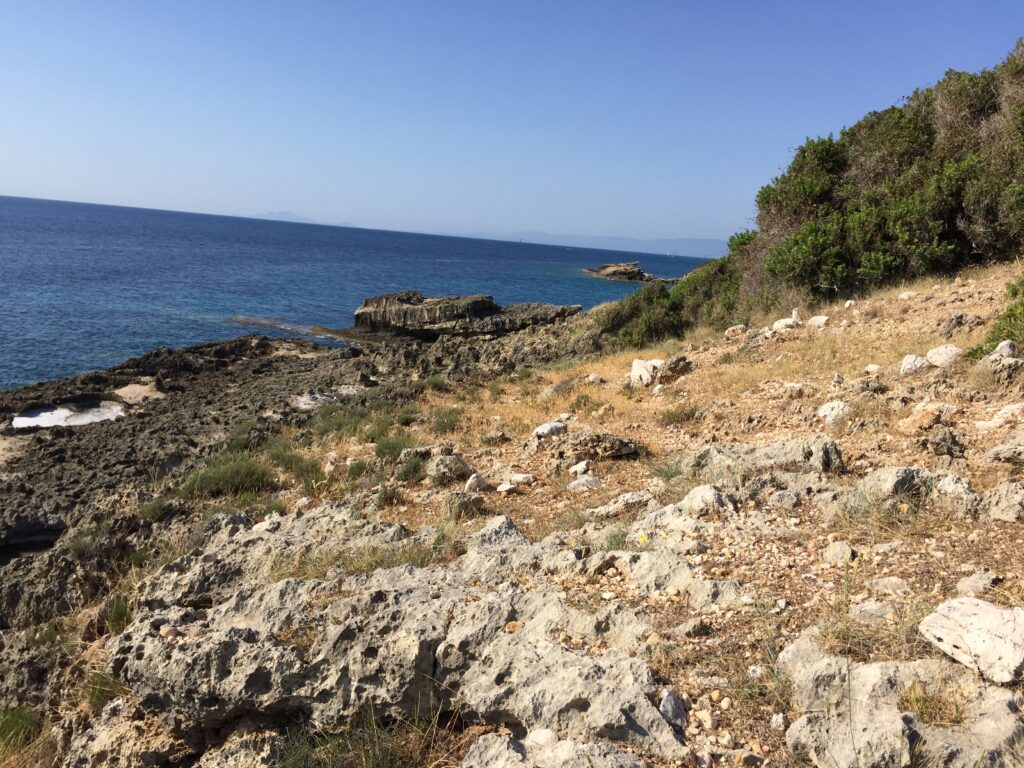
We concentrate on the growing evidence Neanderthals exploited novel landscapes in the lead-up to the Last Glacial Maximum, a major cold period that began 26,000 years ago. Our project centers on the Ionian islands of Kephalonia, Zakynthos, and Ithaka, in western Greece—places Neanderthals would have needed simple watercraft to reach.
Q:
This is a project I am pursuing with colleagues in the U.K. and Greece, Greek antiquities departments, the National Archaeological Museum in Athens, and students from the Department of History, Archaeology, and Cultural Resources Management of the University of Peloponnese.
We concentrate on the growing evidence Neanderthals exploited novel landscapes in the lead-up to the Last Glacial Maximum, a major cold period that began 26,000 years ago. Our project centers on the Ionian islands of Kephalonia, Zakynthos, and Ithaka, in western Greece—places Neanderthals would have needed simple watercraft to reach.
WHAT FIRST DREW YOU TO THIS TOPIC?
A:
Our project reflects both scholarly and public interest in Neanderthals—an awareness rooted in a growing recognition of our shared humanity and enduring questions about their demise.
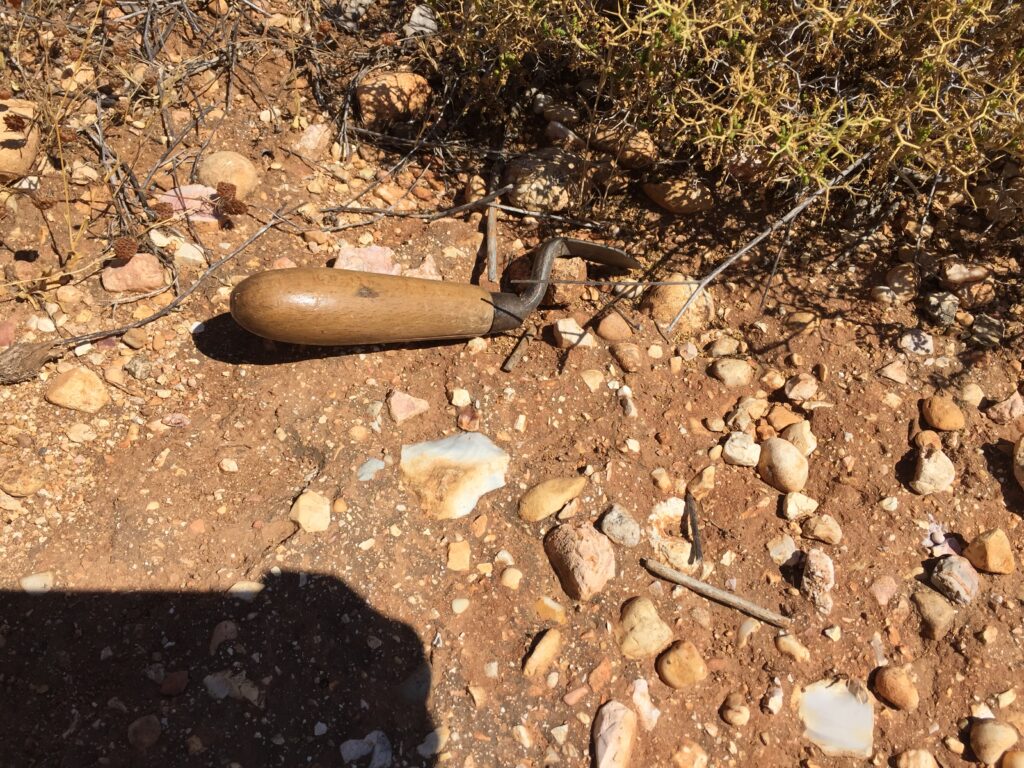
More specifically, this project builds on our previous work on chipped stone assemblages from elsewhere in Greece. Our focus on Kephalonia resulted from a collaboration with the Archaeological Shoreline Investigation project, directed by Professor Evyenia Yiannouli, which in 2023 led to the discovery of stone-tool scatters amid fossil deposits on beaches along the island’s east coast.
More specifically, this project builds on our previous work on chipped stone assemblages from elsewhere in Greece. Our focus on Kephalonia resulted from a collaboration with the Archaeological Shoreline Investigation project, directed by Professor Evyenia Yiannouli, which in 2023 led to the discovery of stone-tool scatters amid fossil deposits on beaches along the island’s east coast.
WHY DOES THIS WORK MATTER RIGHT NOW?
A:
In recent years, there has been growing interest in how Neanderthal behaved in the period just before their disappearance. At the same time, advances in genetics have highlighted the significance of Neanderthal contribution to the gene pool across Europe and Asia.
Our project shifts the focus from extinction to adaptation, asking how Neanderthals coped with the growing challenges of the Ice Age between 50,000 and 40,000 years ago—just before the appearance of modern Humans. In particular, we investigate seafaring as a key adaptation that enabled Neanderthals to access and exploit coastal islands such as Kephalonia.
Q:
Our project shifts the focus from extinction to adaptation, asking how Neanderthals coped with the growing challenges of the Ice Age between 50,000 and 40,000 years ago—just before the appearance of modern Humans. In particular, we investigate seafaring as a key adaptation that enabled Neanderthals to access and exploit coastal islands such as Kephalonia.
HOW WILL WENNER-GREN SUPPORT SHAPE YOUR PROJECT?
A:
Support from the Wenner-Gren will enable us to conduct three interrelated studies.
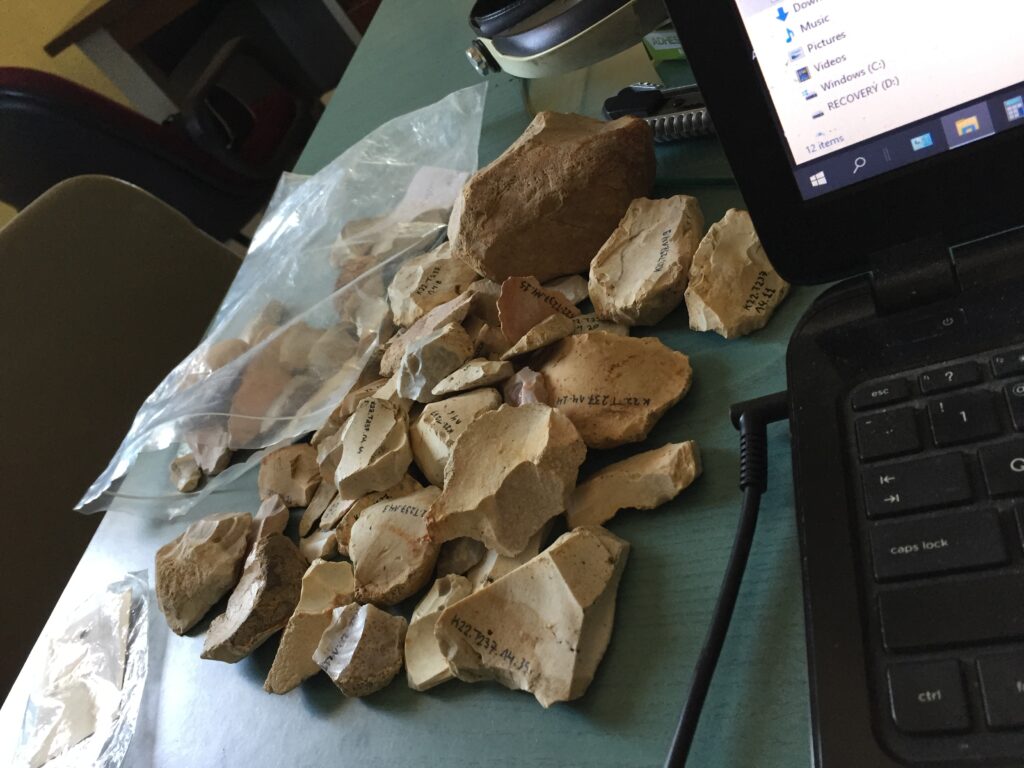
First, we will carry out a comparative analysis of all chipped stone recovered over the past 50 years on the islands of Kephalonia, Zakynthos, and Ithaka.
Second, in collaboration with the University of Ioannina, we will conduct a study to date Kephalonia’s fossil beaches using luminescence dating, a technique that determines when sediments were last exposed to sunlight.
Third, in collaboration with the University of Thessaloniki, we will undertake an archipelago-wide assessment of the availability and nature of raw flint used by Neanderthals to make tools.
First, we will carry out a comparative analysis of all chipped stone recovered over the past 50 years on the islands of Kephalonia, Zakynthos, and Ithaka.
Second, in collaboration with the University of Ioannina, we will conduct a study to date Kephalonia’s fossil beaches using luminescence dating, a technique that determines when sediments were last exposed to sunlight.
Third, in collaboration with the University of Thessaloniki, we will undertake an archipelago-wide assessment of the availability and nature of raw flint used by Neanderthals to make tools.
WHAT DO YOU HOPE PEOPLE OUTSIDE YOUR FIELD TAKE AWAY FROM YOUR WORK?
A:
We hope that our work will support the growing awareness that Neanderthals, like modern Humans, were capable of adapting to the Ice Age’s changing conditions.
Seafaring is commonly thought to have appeared in the region about 14,000 years ago, during the terminal Late Upper Palaeolithic and Mesolithic periods. This view is based on the appearance of obsidian from the island of Melos, in southeastern Greece, found at sites in the eastern Peloponnese—over 100 miles away—material that could only have been carried across the Myrtoan Sea by humans.
By verifying that Kephalonia and the other islands in the archipelago remained isolated from the mainland, the presence of Neanderthal tools there will push back the adoption of seafaring to before 40,000 years ago.
And so, our project aims to provide new insights into the lives of the last Neanderthals in Greece and the wider southeastern Balkans. We hope to provide evidence that Neanderthals were not the brutal cave dwellers of popular imagination, but populations who had developed significant technological dexterity and cognitive skills.
Seafaring is commonly thought to have appeared in the region about 14,000 years ago, during the terminal Late Upper Palaeolithic and Mesolithic periods. This view is based on the appearance of obsidian from the island of Melos, in southeastern Greece, found at sites in the eastern Peloponnese—over 100 miles away—material that could only have been carried across the Myrtoan Sea by humans.
By verifying that Kephalonia and the other islands in the archipelago remained isolated from the mainland, the presence of Neanderthal tools there will push back the adoption of seafaring to before 40,000 years ago.
And so, our project aims to provide new insights into the lives of the last Neanderthals in Greece and the wider southeastern Balkans. We hope to provide evidence that Neanderthals were not the brutal cave dwellers of popular imagination, but populations who had developed significant technological dexterity and cognitive skills.