Grantee
Affiliation
Year Funded
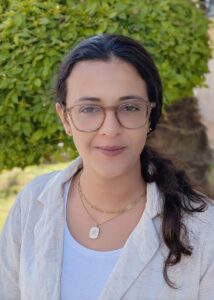
Daniela Filipa Mirote de Matos
Lisbon, U. of
2025
The Early Middle Stone Age in the Northern Namib Desert
WHAT IS YOUR PROJECT ABOUT?
A:
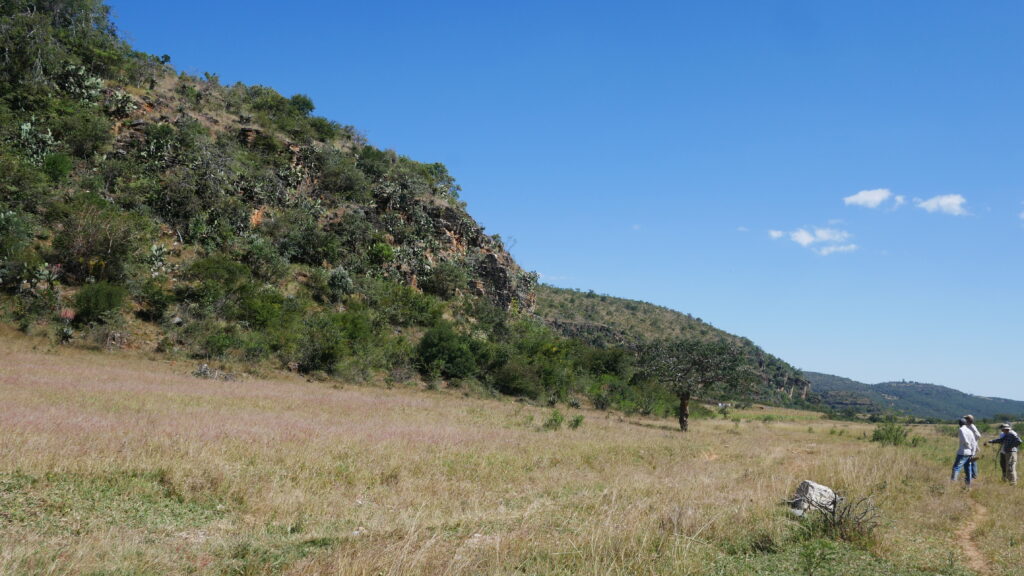
My project investigates the paleoanthropological and archaeological record of human evolution and adaptation in southern Angola. By combining methods from archaeology and the natural sciences, I aim to understand how ancient human groups from 800,000 years to 200,000 years ago lived, moved, produced tools, and adapted to landscapes shaped by highly varied environments, including arid and semi-arid regions. The project also relies strongly on collaboration with local communities, whose knowledge of the landscape is essential for locating sites, caves, fossils, and stone tools.
Q:
WHAT FIRST DREW YOU TO THIS TOPIC?
A:
I was first drawn to this research by a broader question: how did humans emerge in Africa and learn to live across such different landscapes?
Southern Angola is a fascinating place to explore that question because it combines challenging arid and semi-arid environments with a rich record of Early and Middle Stone Age artifacts, including materials from the Namib Desert region. It also contains important ancient fossil sites, particularly in the Humpata Caves, where both extant and extinct species are represented.
For me, this makes southern Angola a key place to understand not only human adaptation, but also the wider environmental and biological history of Africa along the Atlantic Coast.
Southern Angola is a fascinating place to explore that question because it combines challenging arid and semi-arid environments with a rich record of Early and Middle Stone Age artifacts, including materials from the Namib Desert region. It also contains important ancient fossil sites, particularly in the Humpata Caves, where both extant and extinct species are represented.
For me, this makes southern Angola a key place to understand not only human adaptation, but also the wider environmental and biological history of Africa along the Atlantic Coast.
WHAT IS ONE MOMENT FROM YOUR WORK THAT HAS STAYED WITH YOU?
A:
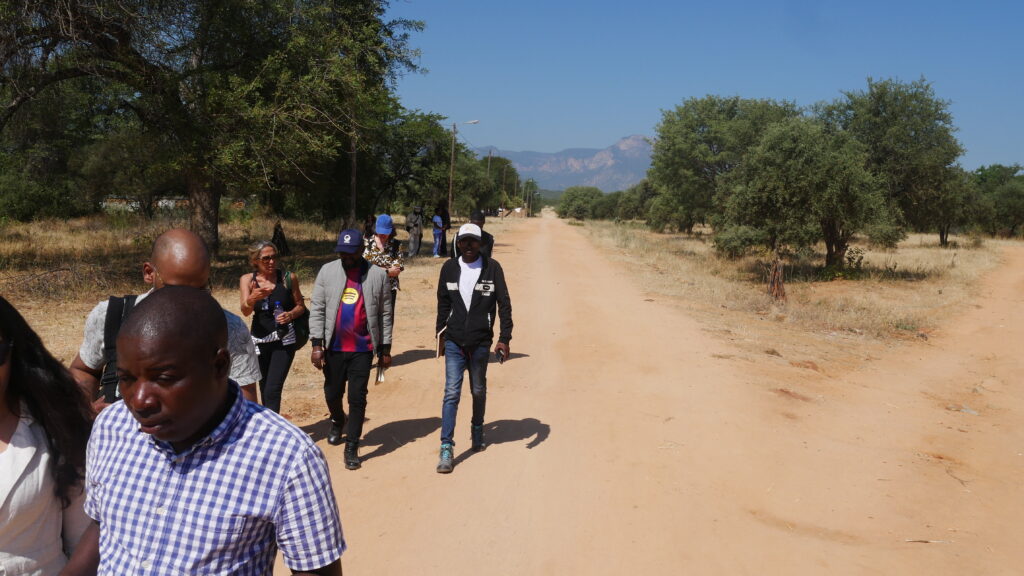
Working in the field with local communities. Community members are often essential to the research: they know the landscape deeply, help us locate caves and archaeological sites, and sometimes identify fossil bones or knapped stone tools that might otherwise be missed.
These moments remind me that archaeological research is not only about objects and sites, but also about relationships, shared knowledge, and collaboration.
These moments remind me that archaeological research is not only about objects and sites, but also about relationships, shared knowledge, and collaboration.
WHY DOES THIS WORK MATTER RIGHT NOW?
A:
This work matters right now because Angola can help fill a major gap in the story of human evolution in Africa. Although the country lies in a key position between central, southern, and Atlantic Africa, its Early and Middle Stone Age record from 3.8 millions of years ago to 70,000 years ago remains poorly known compared with other regions.
This gap was created by decades of conflict and political instability in the region, but Angola is now a peaceful country with favorable conditions to continue fieldwork in paleoanthropology. By studying ancient stone tools and landscapes in Angola, we can better understand how early human groups moved, adapted to environmental change, and expanded into new environments.
The research also helps protect Angola’s archaeological heritage and brings the country more fully into international conversations about the deep history of our species.
Q:
This gap was created by decades of conflict and political instability in the region, but Angola is now a peaceful country with favorable conditions to continue fieldwork in paleoanthropology. By studying ancient stone tools and landscapes in Angola, we can better understand how early human groups moved, adapted to environmental change, and expanded into new environments.
The research also helps protect Angola’s archaeological heritage and brings the country more fully into international conversations about the deep history of our species.
HOW HAS THIS GRANT INFLUENCED YOUR FUTURE PLANS?
A:
Wenner-Gren support has been fundamental in allowing this project to move forward as an interdisciplinary and collaborative study. This grant has helped me develop a long-term research program focused on Angola’s deep human past consolidating my career trajectory as an independent researcher and improved chances for subsequent funding.
It has strengthened my commitment to building collaborative, interdisciplinary research in the country and to training new generations of researchers. Angola has an important place in the story of human evolution, and this knowledge is built through collaboration with different society members. The deep past is not only something that happened in a few famous regions of Africa; it is a continent-wide story made up of many landscapes, populations, and histories.
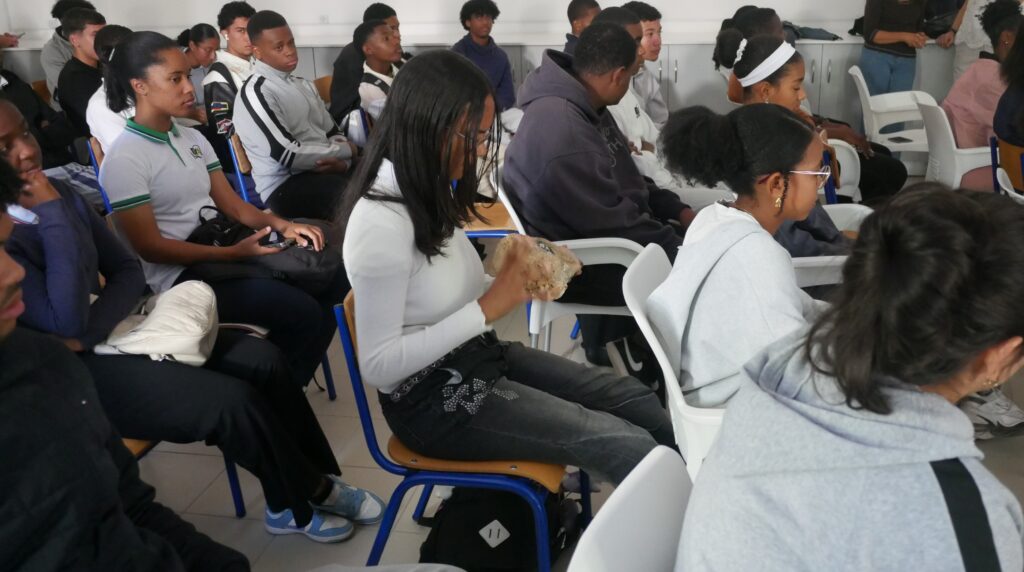
Archaeology is not only produced in laboratories or universities; it also depends on people who know the land, remember places, and help researchers recognize traces of the past. During our fieldwork seasons we take time to engage with local people, stakeholders, museums and schools.
Local communities are essential partners in documenting and protecting Angola’s deep history.
It has strengthened my commitment to building collaborative, interdisciplinary research in the country and to training new generations of researchers. Angola has an important place in the story of human evolution, and this knowledge is built through collaboration with different society members. The deep past is not only something that happened in a few famous regions of Africa; it is a continent-wide story made up of many landscapes, populations, and histories.
Archaeology is not only produced in laboratories or universities; it also depends on people who know the land, remember places, and help researchers recognize traces of the past. During our fieldwork seasons we take time to engage with local people, stakeholders, museums and schools.
Local communities are essential partners in documenting and protecting Angola’s deep history.