To Support Training in Sociocultural/Applied Anthropology
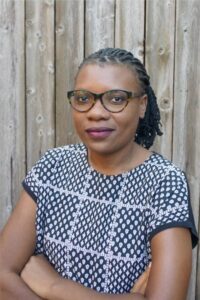
Born in the Dominican Republic to Haitian parents, my scholarship is shaped by lived experience and sustained community engagement. For more than a decade, I led the Reconocido Movement, an organization of Dominicans of Haitian descent advocating against discrimination and for nationality rights following Ruling 168/13 of the Dominican Constitutional Court. This work solidified my commitment to producing research with communities affected by racialized migration policies.
I hold a BA in Sociology from the Universidad Autónoma de Santo Domingo and an MA in Latin American and Caribbean Studies from New York University. My previous research examined women’s agency and resistance in bateyes (sugarcane communities). I argue that batey communities have not simply endured marginalization; rather, they have forged collective identities, community-based medical practices, and political strategies grounded in their structural exclusion. Life in the batey is therefore not merely survival but a sustained practice of resistance.
As a Ph.D. student in applied anthropology at the University of South Florida, my doctoral research operates at the intersection of migration, race, health, and reproduction. I analyze how discriminatory migration regimes and racialized state discourses shape access to healthcare, particularly in the contemporary context of detention and mass deportation. I focus specifically on how women mobilize ancestral knowledge, community solidarity, and embodied practices to assert bodily autonomy during birth and postpartum experiences.
I seek to produce rigorous anthropological scholarship grounded in community realities. My background in human rights advocacy informs both my methodological and ethical commitments: research must not only interpret inequality but also engage with it. My goal is to generate knowledge that contributes to academic debates while supporting communities navigating racialized state systems.