Fejos Postdoctoral Fellow: Hanne Bess Boelsbjerg
We’re excited to share the following trailer and blogpost from Hanne Bess Boelsbjerg who in 2024 was awarded a Fejos Fellowship in Public Media to aid filming, When Death Draws Near.
The Wenner-Gren Fejos Fellowship in Public Media enabled me to complete the ethnographic documentary When Death Draws Near (Danish title: Når døden nærmer sig), a 50-minute documentary exploring experiences of death and dying in a contemplative community in rural Denmark. The film forms part of the Heart Openings project at Aarhus University which explores how love is experienced and cultivated within Christianity, Sufi-Islam and Tibetan Buddhism across cultural contexts. With tools from visual and collaborative filmmaking I investigated how spiritual understandings of death coexist with contemporary medical understandings. The Fejos Fellowship supported the completion of the film through editing, post-production, sound design, colour grading, and the initial stages of dissemination.
The project grew out of a long-term ethnographic fieldwork within a Danish lay contemplative community inspired by spiritual traditions like Christianity and Dzogchen from Tibetan Buddhism. My research on experiences of love in relation to spiritual practices took an unexpected turn when I was given the opportunity to revisit a dramatic event that had taken place prior to my fieldwork. During a community gathering, one of the members, Bjørn, suddenly collapsed from cardiac arrest while dancing and was successfully resuscitated by some of those present.
After recovering, Bjørn wonders what happened while he was clinically dead. Because he has no memory of the event itself, he must reconstruct it through conversations with those who witnessed it. While his search unfolds, another member of the community, Lissi, receives a terminal diagnosis and consciously decides against further medical treatment. She has prepared herself for death for most of her life and feels ready to face it. Her partner supports her decision. Together, these two stories create an intimate reflection on facing mortality, preparing for one’s death, and the difficult choices surrounding death and dying.
Throughout production, I continued to work according to a collaborative methodology that was agreed upon by the contemplative community where participants were filmed but also involved as co-researchers. Together we viewed material during the editing process, and they reflected on their own recordings, participated in discussions about their self-representation, and contributed to decisions regarding the use of sensitive material. This collaborative process proved especially valuable given the intimate and emotionally demanding subject matter. It also strengthened the anthropological ambition of allowing participants to become active contributors to the knowledge presented in the film rather than simply subjects of observation.
Alongside this process, the contemplative community was invited to participate in two separate screenings of the film – first an early assembly and later a more refined edit. I took this part of the process very seriously, as it reflected the methodological ambition of strengthening the involvement of the co-researchers. For them, it mattered deeply how the community would respond to their portrayal in the film, just as it mattered to me. It was a remarkably fruitful process through which I obtained insight into how they perceived themselves through the gaze of the camera. I also learned about aspects of the resuscitation that had not been shared with me before.
While the project initially centered primarily on Bjørn’s cardiac arrest and questions surrounding resuscitation, it gradually became clear that the film gained considerably greater emotional and philosophical depth by juxtaposing the story of Bjørn’s resuscitation with the unfolding story of Lissi, who was approaching the end of her life through terminal illness. This development transformed the documentary from a reconstruction of one extraordinary event into a broader exploration of how awareness of death and dying shapes everyday life, relationships, and communal practices.
The documentary also offers insights into how spiritual understandings of death interact with medical perspectives. The film portrays how both perspectives coexist within the same individuals and the community. The documentary shows how death becomes both a deeply personal matter and a profoundly social event, where meaning is created collectively through conversations, rituals, memories, and care.
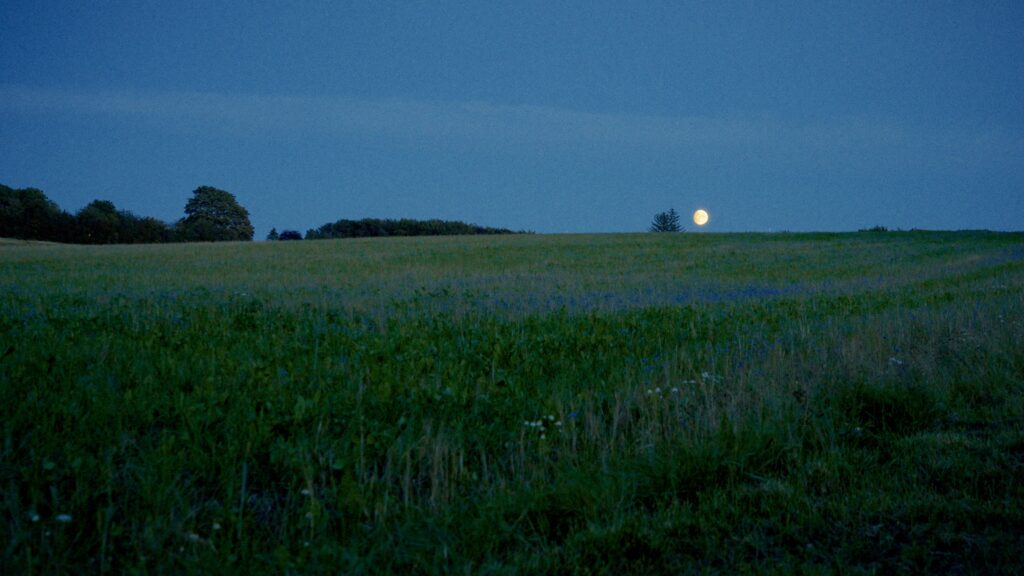
A central ambition throughout the filmmaking process was to communicate anthropological research through cinematic form rather than explanatory narration. The film therefore relies primarily on observational scenes, intimate conversations, and the atmosphere of the landscape surrounding the contemplative community.
When Death Draws Near is my first feature-length documentary. The process of its making involved close collaboration with experienced filmmakers and researchers while developing my own cinematic voice. The combination of anthropological fieldwork with collaborative filmmaking has significantly influenced my research and filmmaking practice. Doing research as a joint venture with colleagues and collaborators taught me the importance of taking in as many perspectives as possible and reflect them respectfully. At the same time I learned that being true to my cinematic vision ensured that the insights gathered during fieldwork could be present in subtle ways.
The film has now been completed with a runtime of 50 minutes. It is produced by Persona Film in collaboration with Christian Suhr and Martijn van Beek (producers).
Although the movie has not had its premiere yet, it has already sparked interest. I had the opportunity to present the preliminary version of the movie to the commissioning editor at the Danish Broadcasting Corporation (DR), responsible for selecting content for the series Den fælles samtale (Our Shared Conversation). During January and February, the common theme across DR’s television, radio, and podcast platforms was death and dying. Due to this the editor recommended my work to several radio producers. This resulted in an invitation to appear on the programme Ditlev & Døden (Ditlev and Death), where I discussed my research in the contemplative community. Exploring the question of how long the moment of death lasts – which became the title of the episode – we also touched upon my own experiences with death and dying, making it an unusually intimate and moving conversation. I have since received many responses from listeners, with people reaching out to ask where they could watch the film and expressing an interest in engaging further with my work.
During the editing process, I have received valuable feedback from colleagues affiliated with visual anthropology, medical anthropology, sociology of death and dying and the study of religion. All the feedback helped refine the editing and enhance the clarity of the film.
In addition, I have received comments from filmmaker and anthropologist Donagh Coleman, Buddhist scholar Anne Klein, and philosopher Evan Thompson. They have all shown great interest in the film, reinforcing my belief that it has the potential to make an academic contribution well beyond Denmark.
Planning the dissemination of the film will be my next step, as I believe it has considerable potential to reach both academic audiences and the wider public.
Looking back, the Wenner-Gren Fellowship proved essential for transforming extensive ethnographic fieldwork into a completed cinematic work. The fellowship made it possible for me to devote the necessary time to editing, post-production, and collaborative review processes required by both the sensitive nature of the material and the anthropological ambitions of the project. The resulting documentary demonstrates how ethnographic film can contribute to contemporary conversations about death, spirituality, medicine, and meaning-making. I am profoundly grateful to the Wenner-Gren Foundation for making this work possible.
Sources